
Hey there! As a supplier of towable boom lifts, I often get asked about the maximum wind speed at which these machines can be safely operated. It's a crucial question, especially for those in the construction, maintenance, and other industries that rely on these versatile lifts to work at height.
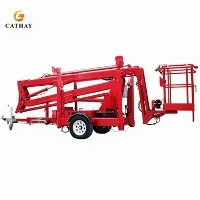
Let's start by understanding what a towable boom lift is. It's a type of aerial work platform that can be easily towed to different job sites. It's like having a mobile elevator that can reach up high. You've got different types like Trailer Boom Lifts, Towable Boom Lift Articulated, and Small Electric Boom Lift, each with its own features and uses.
The safety of operating a towable boom lift in windy conditions depends on a bunch of factors. First off, the design of the lift plays a huge role. Different models have different wind - resistance capabilities. Some are built more sturdily, with wider bases and better - balanced booms, which can handle stronger winds. The size and shape of the platform also matter. A larger platform will catch more wind, making the lift more unstable compared to a smaller one.
Another important factor is the height at which the lift is extended. The higher the boom is extended, the more susceptible the lift becomes to wind forces. Think about it like a flagpole. The higher up you go, the more the wind can push against it. So, when the boom is fully extended, the maximum safe wind speed usually goes down.
Manufacturers typically provide guidelines on the maximum wind speed for safe operation. These guidelines are based on a lot of testing and engineering calculations. Generally speaking, for most standard towable boom lifts, the maximum wind speed for safe operation is around 28 - 30 mph (45 - 48 km/h) when the lift is at its lowest configuration. But once the boom is extended, especially if it's fully extended, this speed can drop to around 20 - 22 mph (32 - 35 km/h).
It's not just about the numbers on the paper, though. You've got to use your common sense and assess the actual conditions on the job site. For example, if the wind is gusty, rather than a steady breeze, it can create sudden and unpredictable forces on the lift. Gusts can push the lift suddenly, increasing the risk of tipping over. So, even if the average wind speed seems okay according to the manufacturer's guidelines, gusty winds can make the situation much more dangerous.
The terrain where the lift is set up also makes a difference. If the ground is uneven, soft, or unstable, the lift will be less stable in windy conditions. So, always make sure the lift is set up on a firm, level surface before you start working.
Weather conditions other than wind can also affect the safety of operating a towable boom lift. For instance, rain or snow can make the ground slippery, and ice on the boom can add extra weight and change the balance of the lift. So, you've got to consider the whole package of weather factors, not just the wind speed.
As a supplier, I always recommend our customers to invest in some additional safety features for their towable boom lifts. Things like wind sensors can be a game - changer. These sensors can monitor the wind speed in real - time and give you an alert when it gets close to or exceeds the maximum safe limit. It's an extra layer of protection that can save lives and prevent damage to the equipment.
Training for the operators is absolutely crucial. They need to know how to read the manufacturer's guidelines, how to assess the wind and other environmental conditions, and what to do in case of an emergency. A well - trained operator will be able to make informed decisions about when it's safe to operate the lift in windy conditions.
So, if you're in the market for a towable boom lift, keep all these factors in mind. The maximum safe wind speed is just one piece of the puzzle, but it's an important one. You want to make sure that you're getting a lift that can handle the conditions you'll encounter on your job sites.
Whether you're interested in Trailer Boom Lifts, Towable Boom Lift Articulated, or Small Electric Boom Lift, we've got a wide range of options to suit your needs. If you're thinking about purchasing a towable boom lift or need more information, don't hesitate to reach out. We're here to help you make the right choice and ensure that you can operate your lift safely and efficiently.


References
- Occupational Safety and Health Administration (OSHA) guidelines on aerial work platforms.
- Manufacturer's manuals of various towable boom lift models.