
Can a trailer man lift be used for telecommunications tower maintenance? This is a question that many in the telecommunications industry often ponder. As a supplier of Trailer Man Lifts, I am well - versed in the capabilities and limitations of these equipment, and I'm here to explore whether they are a suitable option for telecommunications tower maintenance.
Understanding Trailer Man Lifts
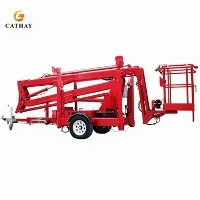
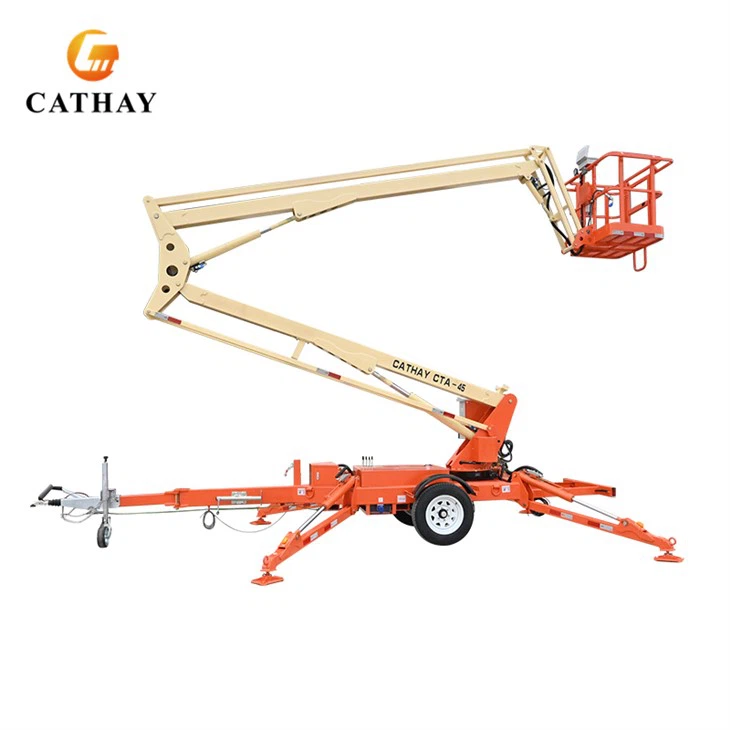
Trailer man lifts, also known as Trailer Boom Lift, are a type of aerial work platform. They are designed to be towed behind a vehicle, offering a high degree of mobility. These lifts come in various configurations, with different working heights, outreach capabilities, and load capacities.
One of the key advantages of trailer man lifts is their portability. They can be easily transported from one location to another, which is crucial for industries that require work at multiple sites, such as telecommunications. Unlike larger, more stationary lifting equipment, trailer man lifts can be quickly set up and moved, reducing downtime between jobs.
Another benefit is their relatively compact size. In many cases, telecommunications towers are located in areas with limited space, such as urban rooftops or rural areas with narrow access roads. Trailer man lifts can navigate these tight spaces more easily compared to larger cranes or other heavy - duty lifting equipment.
Requirements for Telecommunications Tower Maintenance
Telecommunications tower maintenance involves a variety of tasks, including equipment installation, inspection, repair, and replacement. Workers need to reach different heights on the tower, access various components, and often work in challenging environmental conditions.
Height is a critical factor. Telecommunications towers can range from a few meters to over a hundred meters in height. A suitable lifting device must be able to reach the required working height safely and stably. In addition, the lift should provide sufficient outreach to access components that are not directly above the base of the lift.
Safety is of utmost importance. Workers on telecommunications towers are exposed to high - altitude risks, such as falls, electrical hazards, and adverse weather conditions. The lifting equipment must have robust safety features, such as fall protection systems, emergency stop buttons, and stability control mechanisms.
Can Trailer Man Lifts Meet the Requirements?
Height and Outreach
Many modern trailer man lifts are capable of reaching significant heights. Some models can reach up to 30 meters or more, which is sufficient for the maintenance of a large number of telecommunications towers. Moreover, they offer a reasonable amount of outreach, allowing workers to access components that are not directly above the lift. For example, a Towable Man Lift with a telescopic boom can extend horizontally to reach areas that are several meters away from the base of the lift.
Mobility and Accessibility
As mentioned earlier, the portability of trailer man lifts makes them ideal for telecommunications tower maintenance. They can be quickly transported to different tower sites, whether in urban or rural areas. Their compact size enables them to access locations with limited space, such as the backyards of buildings where small - scale towers are installed or along narrow country roads leading to rural towers.

Safety Features
Trailer man lifts are equipped with a range of safety features. Most models have a platform guardrail to prevent falls, and some also come with a harness attachment point for additional fall protection. They are designed with stability in mind, with outriggers that can be extended to provide a wider base and better balance. In addition, modern lifts are often equipped with sensors and control systems that can detect and correct any instability during operation.
Limitations of Trailer Man Lifts for Tower Maintenance
Extreme Heights
While many trailer man lifts can reach significant heights, there are still some very tall telecommunications towers that may exceed their capabilities. For extremely tall towers, specialized equipment such as large - scale cranes or self - propelled aerial work platforms may be required.
Heavy - Duty Loads
Telecommunications tower maintenance sometimes involves the installation or replacement of heavy equipment, such as large antennas or communication modules. Trailer man lifts generally have a limited load - carrying capacity compared to larger lifting equipment. If the load to be lifted is too heavy, a more powerful lifting solution may be needed.
Adverse Weather Conditions
Although trailer man lifts are designed to operate in a variety of weather conditions, extreme weather such as high winds, heavy rain, or snow can pose a challenge. High winds can affect the stability of the lift, and wet or icy conditions can make the platform slippery. In such cases, work may need to be postponed until the weather improves.
Conclusion
In conclusion, trailer man lifts can be a valuable tool for telecommunications tower maintenance in many situations. Their portability, relatively compact size, and sufficient height and outreach capabilities make them suitable for a wide range of tower - related tasks. However, they do have some limitations, especially when it comes to extremely tall towers, heavy - duty loads, and adverse weather conditions.
When considering using a trailer man lift for telecommunications tower maintenance, it is essential to assess the specific requirements of each job carefully. Evaluate the height, load, and environmental conditions of the tower site to determine if a trailer man lift is the right choice. If you are in the telecommunications industry and are looking for a reliable and cost - effective solution for tower maintenance, our Cherry Picker Lift and other trailer man lift products may be just what you need.
We are always ready to assist you in choosing the most suitable equipment for your needs. If you have any questions or would like to discuss your requirements further, please feel free to contact us. Our team of experts will be happy to provide you with detailed information and guidance on the best lifting solutions for your telecommunications tower maintenance projects.
References
- Aerial Work Platforms: Safety and Use Guidelines, Occupational Safety and Health Administration (OSHA)
- Telecommunications Tower Maintenance Best Practices, Telecommunications Industry Association (TIA)
- Trailer Man Lift Product Manuals, Various Manufacturers