

Testing a new car turntable after installation is a crucial step to ensure its proper functionality, safety, and long - term reliability. As a car turntable supplier, I understand the significance of this process and have accumulated extensive experience in guiding customers through it. In this blog, I will share the comprehensive steps and key points for testing a newly installed car turntable.
Pre - test Preparations
Before starting the actual testing, it is essential to make thorough preparations. First, visually inspect the entire car turntable system. Check for any visible damage to the turntable surface, such as scratches, dents, or cracks that might have occurred during installation. Examine the mechanical components, including the bearings, gears, and drive systems. Ensure that all bolts and fasteners are tightened properly to prevent any loosening during operation.
Verify the electrical connections. Make sure that all wires are securely plugged in and there are no exposed or frayed cables. Check the power supply to ensure it meets the specifications of the car turntable. For example, if the turntable requires a specific voltage and frequency, use a multimeter to confirm that the power source provides the correct values.
Clear the area around the turntable. Remove any obstacles, debris, or tools that could interfere with the rotation of the turntable. This not only ensures a smooth test but also enhances safety during the process.
Initial Power - on Test
Once the pre - test preparations are complete, it's time to power on the car turntable. Switch on the power supply and observe the initial reaction of the turntable. Listen for any abnormal noises, such as grinding, rattling, or screeching. These noises could indicate problems with the mechanical components or improper alignment.
Check the control panel. Ensure that all the indicators are working correctly. The control panel should display the status of the turntable, such as power on, standby, or in operation. Try the basic control functions, such as starting and stopping the rotation. The response should be immediate and smooth. If there is a delay or the turntable fails to start or stop as expected, there may be an issue with the control system.
Rotation Testing
The core function of a car turntable is its ability to rotate smoothly. To test the rotation, start the turntable at a slow speed. Observe the rotation direction to ensure it is consistent with the settings on the control panel. The turntable should rotate evenly without any jerks or uneven movements.
Measure the rotation speed. Most car turntables have a specified rotation speed range. Use a tachometer or a speed - measuring device to confirm that the actual rotation speed falls within the acceptable range. If the speed is too fast or too slow, it may affect the performance and safety of the turntable.
During the rotation, check the stability of the turntable. Stand near the turntable and feel for any vibrations. Excessive vibrations could be a sign of an unbalanced load, misaligned components, or a problem with the foundation. If vibrations are detected, stop the turntable immediately and investigate the cause.
Load Testing
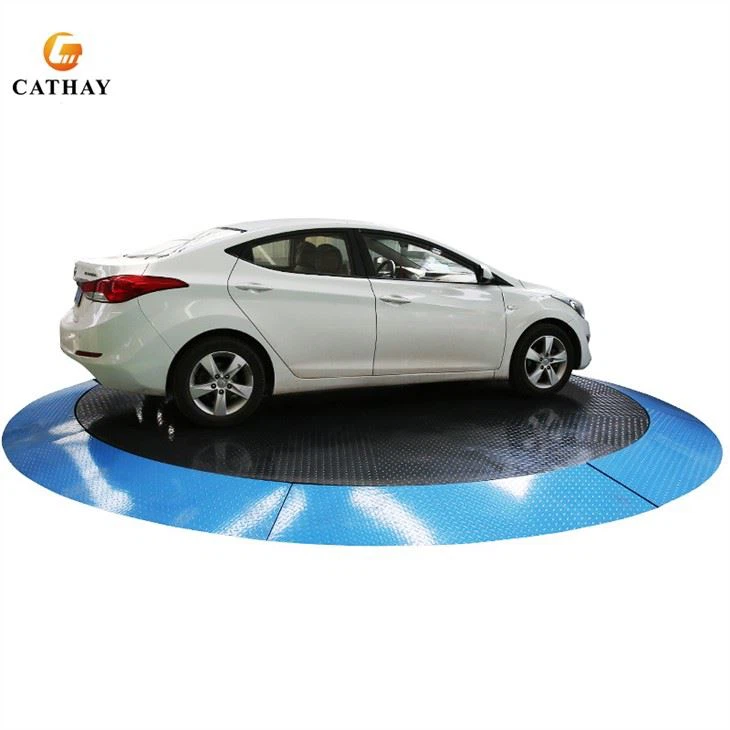
After the initial rotation test, it's time to conduct load testing. For a Vehicle Turntable, park a vehicle on the turntable. Make sure the vehicle is centered on the turntable to ensure an even distribution of the load.
Start the turntable with the vehicle on it. Observe how the turntable behaves under the load. The rotation should still be smooth, and there should be no signs of over - stress on the mechanical or electrical components. Listen for any changes in the noise level or any unusual sounds that may indicate problems.
Test the turntable with different types of vehicles. Different vehicles have different weights and dimensions, which can affect the performance of the turntable. By testing with various vehicles, you can ensure that the turntable can handle a wide range of loads effectively.
Safety Feature Testing
Safety is of utmost importance when it comes to car turntables. Test the emergency stop button. Press the emergency stop button during the rotation of the turntable. The turntable should come to an immediate halt. This feature is crucial in case of an emergency or unexpected situations.

Check the overload protection system. If the turntable has an overload protection mechanism, try to exceed the rated load slightly (while ensuring safety). The overload protection system should activate, stopping the turntable to prevent damage to the components.
Verify the anti - slip surface of the turntable. Walk on the turntable surface to ensure that it provides sufficient traction. This is important to prevent vehicles from slipping during rotation and to ensure the safety of personnel working around the turntable.
Long - term Testing
For a more comprehensive evaluation, conduct long - term testing. Run the turntable continuously for a certain period, such as 24 hours or more. During this time, monitor the performance of the turntable regularly. Check for any signs of wear and tear, overheating of components, or other potential issues.
Record the operating parameters, such as rotation speed, power consumption, and temperature, at regular intervals. Analyze the data to identify any trends or anomalies. Long - term testing can help detect problems that may not be apparent during short - term tests.
Testing a Parking Turntable
If the car turntable is a parking turntable, additional tests are required. Test the parking accuracy. Park a vehicle on the turntable and rotate it to the desired parking position. Check if the vehicle is parked accurately in the designated space. The parking turntable should be able to position the vehicle precisely to maximize the use of parking space.
Test the integration with the parking management system. If the parking turntable is part of a larger parking management system, ensure that it can communicate effectively with other components, such as access control systems and parking sensors.
Testing a Portable Automotive Turntable
For a portable automotive turntable, mobility and ease of setup are key factors. Test the portability by moving the turntable to different locations. Ensure that it can be easily transported and set up without any significant difficulties.
Check the stability of the turntable when it is in use at different locations. The surface on which the portable turntable is placed should be level and stable. Test the turntable on various surfaces, such as concrete, asphalt, and gravel, to ensure its performance in different environments.
Conclusion
Testing a new car turntable after installation is a multi - step process that requires careful attention to detail. By following the steps outlined above, you can ensure that the car turntable operates safely and efficiently. As a car turntable supplier, we are committed to providing high - quality products and comprehensive support to our customers. If you have any questions about testing or purchasing a car turntable, please feel free to contact us for further discussion. We look forward to the opportunity to serve you and help you find the perfect car turntable solution for your needs.
References
- Automotive Turntable Installation and Operation Manuals
- Industry Standards for Car Turntable Safety and Performance