
In the realm of aerial work platforms, the choice between a One Man Lift and a scissor lift can significantly impact the efficiency, safety, and cost - effectiveness of a project. As a supplier of One Man Lifts, I am frequently asked about the differences between these two types of equipment. In this blog, I'll delve into the key distinctions, exploring their features, applications, and advantages for potential users.
Design and Structure
One Man Lifts are engineered with simplicity and portability in mind. They are typically compact, making them easy to maneuver in tight spaces. These lifts often have a single mast or column that provides vertical lift. The platform is usually designed to accommodate one operator along with a limited amount of tools and materials. For example, our Mobile Personnel Lift is a prime example of a One Man Lift. It features a lightweight yet sturdy frame that can be easily pushed around the worksite, even by a single person.
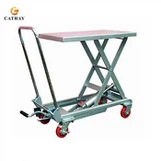
On the other hand, scissor lifts have a more complex design based on a scissor - like mechanism. This mechanism consists of linked, folding supports in a criss - cross pattern, similar to the shape of a scissor. When hydraulic, pneumatic, or mechanical power is applied, the scissor structure expands or contracts, raising or lowering the platform. Scissor lifts can have larger platforms compared to One Man Lifts, allowing multiple workers or a greater amount of equipment to be carried.


Lift Capacity and Platform Size
The lift capacity is a crucial factor when choosing between a One Man Lift and a scissor lift. One Man Lifts are, as the name implies, designed primarily for one person. The platform size is relatively small, typically ranging from a few square feet to around 10 square feet. The weight capacity is usually limited to around 250 - 500 pounds, which is sufficient for a single operator and some hand - held tools.
Scissor lifts, in contrast, have much higher lift capacities. Smaller scissor lifts may have a capacity of around 500 - 1000 pounds, while larger industrial models can handle loads of up to 5000 pounds or more. The platform size can vary greatly, from a small platform suitable for a couple of workers to large platforms that can accommodate a small team along with heavy equipment. For instance, in a construction site where multiple workers need to install ceiling fixtures and carry heavy materials like drywall, a scissor lift would be the more appropriate choice.
Mobility and Maneuverability
One Man Lifts excel in terms of mobility and maneuverability. They are often lightweight and can be easily moved by hand. Some models are equipped with wheels that allow for smooth movement across different surfaces, including indoor floors. Their compact size enables them to fit through narrow doorways and navigate around obstacles with ease. This makes them ideal for tasks in confined spaces such as warehouses, office buildings, or retail stores. Our Dual Mast Lift is a highly maneuverable option that can be quickly positioned in tight areas.
Scissor lifts are generally less mobile and more cumbersome to move. While many modern scissor lifts are equipped with wheels and some form of propulsion system, they are often larger and heavier. Moving a scissor lift to a new location may require more effort and may involve disassembling parts in some cases. However, if the worksite is large and relatively open, scissor lifts can be operated efficiently with the help of their built - in driving systems.
Lift Height
The lift height is another important differentiator. One Man Lifts typically offer a lower maximum lift height compared to scissor lifts. Most One Man Lifts can reach heights of up to 20 - 30 feet. This is suitable for tasks such as changing light bulbs, painting low - rise walls, or performing maintenance on equipment at a moderate height.
Scissor lifts, on the other hand, are capable of reaching much greater heights. Small scissor lifts can reach 20 - 30 feet, but larger industrial scissor lifts can extend up to 50 - 60 feet or even higher. This makes them suitable for high - rise construction, tree trimming, and maintenance work on tall buildings.
Power Source
One Man Lifts often use batteries as a power source. Battery - powered One Man Lifts are quiet, emit no fumes, and are suitable for indoor use. They are also relatively easy to maintain, with simple battery charging requirements. Some models may have rechargeable battery packs that can be swapped out quickly to minimize downtime.
Scissor lifts can be powered by various sources, including batteries, diesel, or gasoline. Battery - powered scissor lifts are similar to One Man Lifts in terms of their suitability for indoor use. Diesel and gasoline - powered scissor lifts, however, are more commonly used in outdoor applications where the power requirements are higher and emissions are less of a concern. Diesel - powered scissor lifts are often preferred for large construction sites where continuous operation is required.
Cost
In general, One Man Lifts are more cost - effective than scissor lifts. The initial purchase price of a One Man Lift is usually lower due to its simpler design and smaller size. Additionally, the operating costs, such as fuel or battery replacement, are also relatively low. This makes One Man Lifts an attractive option for small businesses or contractors with limited budgets.
Scissor lifts, on the other hand, are more expensive to purchase and operate. The larger size, more complex mechanism, and higher power requirements contribute to the higher cost. However, for large - scale projects where the lift capacity, height, and platform size of a scissor lift are necessary, the investment may be justified.
Applications
One Man Lifts are well - suited for a variety of light - duty tasks. In warehouses, they can be used for inventory management, such as reaching high shelves to retrieve or stock items. In office buildings, they are ideal for tasks like installing signage, changing light fixtures, or performing minor repairs. Retail stores can use One Man Lifts for window dressing and shelf stocking. Our Aluminum Alloy Lift Platform is a popular choice for these types of applications due to its durability and ease of use.
Scissor lifts are commonly used in construction, industrial maintenance, and large - scale event set - ups. In construction, they are used for tasks such as installing roofing materials, plastering walls, and erecting steel structures. Industrial facilities use scissor lifts for equipment maintenance, painting large machinery, and accessing high - level control panels. At events, scissor lifts can be used for setting up lighting rigs, sound systems, and stage decorations.
Safety Features
Both One Man Lifts and scissor lifts are equipped with safety features to protect the operator. One Man Lifts typically come with guardrails around the platform to prevent the operator from falling. They also have emergency stop buttons and safety locks to ensure that the lift remains stable during operation.
Scissor lifts have additional safety features due to their larger size and higher lift capacities. They often have outriggers to provide additional stability, especially when the lift is extended to its maximum height. Some scissor lifts are also equipped with tilt sensors that can detect if the lift is on an uneven surface and automatically stop the operation to prevent accidents.
Conclusion
In summary, the choice between a One Man Lift and a scissor lift depends on several factors, including the nature of the task, the worksite environment, the required lift height, and the budget. One Man Lifts are ideal for light - duty tasks in confined spaces, offering portability, ease of use, and cost - effectiveness. Scissor lifts, on the other hand, are better suited for heavy - duty tasks, high - rise applications, and large - scale projects.
If you're in the market for a One Man Lift, I encourage you to reach out for more information. Our team of experts can help you select the right model for your specific needs. Whether you're a small business owner, a contractor, or an industrial facility manager, we have the solutions to meet your aerial work platform requirements. Contact us today to start a conversation about your project and explore how our One Man Lifts can enhance your work efficiency and safety.
References
- Aerial Lift Safety Handbook, Occupational Safety and Health Administration (OSHA)
- Lift Equipment Manufacturer's Product Manuals
- Industry Reports on Aerial Work Platforms