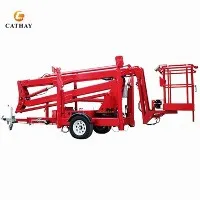

As a supplier of Trailer Boom Lifts, I understand the paramount importance of electrical safety when operating these powerful machines. Trailer Boom Lifts are essential equipment in various industries, such as construction, maintenance, and tree care, providing access to elevated work areas. However, working with electrical systems in these lifts requires strict adherence to safety precautions to prevent accidents, injuries, and even fatalities. In this blog post, I will discuss the key electrical safety precautions for Trailer Boom Lifts, ensuring the well - being of operators and the efficiency of operations.
1. Pre - operation Inspection
Before using a Trailer Boom Lift, a thorough pre - operation inspection is crucial. This inspection should include a detailed check of the electrical components. First, visually inspect all electrical cables and wires for any signs of damage, such as cuts, abrasions, or fraying. Damaged cables can expose live wires, posing a significant electrical shock hazard. If any damage is detected, the lift should not be used until the cables are repaired or replaced.
Check the battery condition. A weak or damaged battery can lead to electrical malfunctions. Ensure that the battery terminals are clean and tightly connected. Corroded terminals can cause poor electrical conductivity, which may affect the lift's performance and safety. Also, verify the battery voltage using a voltmeter. If the voltage is below the recommended level, the battery may need to be charged or replaced.
Inspect the control panel and switches. Make sure that all switches are in the off position before starting the lift. Check for any loose or broken switches, as they can cause unexpected electrical activation of the lift's functions. Test the emergency stop button to ensure it is working properly. The emergency stop button is a critical safety feature that can quickly cut off the electrical power in case of an emergency.
2. Operator Training
Proper operator training is essential for electrical safety. Operators should be trained on the specific electrical systems of the Trailer Boom Lift they are using. They should understand how the electrical components work, including the power source, control systems, and safety devices. Training should cover topics such as electrical shock hazards, proper use of personal protective equipment (PPE), and emergency procedures.
Operators should be taught to recognize potential electrical hazards. For example, they should be aware of the danger of working near overhead power lines. The minimum safe distance from power lines should be clearly defined in the training. Operators should also know how to identify signs of electrical problems, such as sparking, unusual noises, or burning smells. If any of these signs are detected, the lift should be shut down immediately, and a qualified technician should be called to inspect the equipment.
In addition to theoretical training, practical hands - on training is necessary. Operators should practice operating the lift in a safe environment, following all electrical safety procedures. They should be able to demonstrate their ability to perform pre - operation inspections, operate the lift safely, and respond to electrical emergencies.
3. Personal Protective Equipment (PPE)
Wearing appropriate PPE is an important electrical safety measure. Operators should wear insulated gloves when working on or near electrical components. Insulated gloves can protect against electrical shock by providing a barrier between the operator's hands and the electrical current. The gloves should be tested regularly to ensure their insulation properties are intact.
Safety glasses should also be worn to protect the eyes from any flying debris or sparks that may occur during electrical work. In some cases, operators may need to wear a hard hat with electrical insulation properties, especially when working in areas where there is a risk of electrical contact with overhead structures.
Furthermore, operators should avoid wearing jewelry or other conductive materials that could increase the risk of electrical shock. Conductive materials can act as a path for electrical current, increasing the likelihood of injury.
4. Working Near Electrical Sources
When operating a Trailer Boom Lift near electrical sources, extra precautions must be taken. As mentioned earlier, maintaining a safe distance from overhead power lines is of utmost importance. The safe distance depends on the voltage of the power lines. For example, for low - voltage lines (less than 50 kV), the minimum safe distance is typically 10 feet, while for high - voltage lines, the distance may be much greater.
If it is necessary to work near electrical equipment, such as transformers or electrical panels, the lift should be properly grounded. Grounding helps to prevent electrical shock by providing a path for the electrical current to flow safely into the ground. The grounding system should be checked regularly to ensure its effectiveness.
Before starting work in an area with electrical sources, operators should obtain information about the location and voltage of the electrical systems. They should also consult with a qualified electrician if there are any uncertainties about the safety of the work area.
5. Maintenance and Repairs
Regular maintenance of the Trailer Boom Lift's electrical systems is essential for safety. A maintenance schedule should be established, and all electrical components should be inspected and serviced at regular intervals. This includes checking the wiring, connectors, relays, and fuses.
During maintenance, it is important to follow proper lock - out/tag - out procedures. Lock - out/tag - out is a safety procedure used to ensure that electrical equipment is de - energized before maintenance or repair work is performed. This involves locking and tagging the power source to prevent accidental re - energization.
Only qualified technicians should perform electrical repairs. Electrical systems in Trailer Boom Lifts are complex, and improper repairs can lead to serious safety hazards. Technicians should have the necessary training and experience to work on electrical components. They should also use the correct tools and follow the manufacturer's repair instructions.
6. Environmental Considerations
The environment in which the Trailer Boom Lift is used can also affect electrical safety. In wet or damp conditions, the risk of electrical shock is increased. If the lift is used outdoors in rainy or humid weather, all electrical components should be protected from water. Covers can be used to shield the control panel and electrical connections.
In dusty or dirty environments, dust and debris can accumulate on electrical components, which can cause overheating and electrical malfunctions. Regular cleaning of the electrical components is necessary to prevent these problems.
Also, extreme temperatures can affect the performance of the electrical systems. In cold weather, the battery's capacity may be reduced, and the viscosity of the lubricants in the electrical motors may increase, affecting their operation. In hot weather, overheating of electrical components can occur. Appropriate measures should be taken to protect the electrical systems from extreme temperatures, such as using insulation or cooling devices.
7. Emergency Procedures
In case of an electrical emergency, operators should know the proper emergency procedures. If an operator experiences an electrical shock, the power should be shut off immediately using the emergency stop button or by disconnecting the power source. First - aid should be provided to the injured person as soon as possible, and emergency medical services should be called.
If there is a fire caused by an electrical fault, a dry chemical fire extinguisher should be used. Water should not be used to extinguish an electrical fire, as it can conduct electricity and increase the risk of injury.


After an electrical emergency, a thorough investigation should be conducted to determine the cause of the problem. The lift should not be put back into service until all electrical issues have been resolved and the equipment has been inspected and approved by a qualified technician.
As a Trailer Boom Lift supplier, we offer a wide range of high - quality products, including Aerial Trailer Boom Lift, Aerial Towable Electric Mobile Boom Lift, and Spider Lift Cherry Picker. Our products are designed with the latest safety features and comply with all relevant safety standards.
If you are interested in purchasing a Trailer Boom Lift or have any questions about electrical safety or our products, we encourage you to contact us for a detailed discussion. Our team of experts is ready to provide you with the best solutions for your specific needs.
References
- OSHA (Occupational Safety and Health Administration). Electrical Safety Standards.
- Manufacturer's Manuals for Trailer Boom Lifts.
- Industry Best Practices for Aerial Lift Safety.