
Vertical mast lifts are indispensable equipment in various industries, offering a safe and efficient way to reach elevated work areas. As a trusted vertical mast lift supplier, I understand the critical importance of adhering to safety regulations when using these machines. In this blog, I'll share some common safety regulations for operating vertical mast lifts to ensure the well - being of operators and the smooth progress of work.
Pre - operation Safety Checks
Before starting to use a vertical mast lift, a series of pre - operation safety checks must be carried out. First, visually inspect the lift's structure. Check for any signs of damage, such as cracks, dents, or loose parts on the mast, platform, and base. A damaged mast can compromise the stability of the lift, and loose parts may fall during operation, posing a risk to the operator and those below.
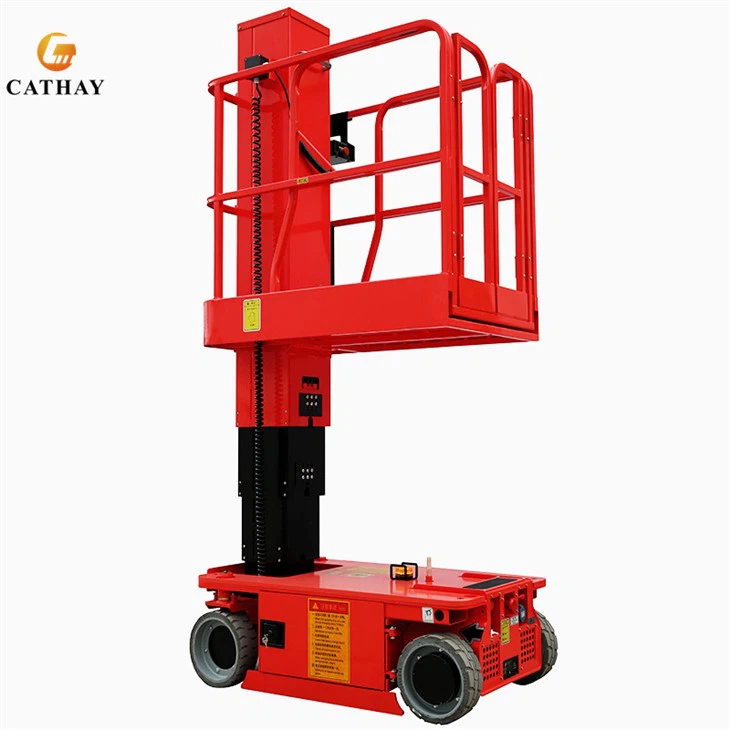
Next, examine the hydraulic system. The hydraulic system is responsible for lifting and lowering the platform. Look for any signs of hydraulic fluid leakage around the hoses, cylinders, and connections. Low hydraulic fluid levels or leaks can lead to improper lifting or sudden drops of the platform. You can refer to our Hydraulic Telescopic Man Driving Single Mast Lift product page to understand more about the hydraulic system in our lifts.
The electrical system also requires careful inspection. Check the battery condition, ensuring that it is fully charged and the terminals are clean and tightly connected. Faulty electrical connections can cause malfunctions in the lift's controls, such as unresponsive buttons or unexpected movements. Additionally, test all the control functions, including the up, down, and emergency stop buttons, to make sure they are working properly.
Inspect the wheels and brakes. The wheels should be in good condition, without excessive wear or damage. The brakes must be able to hold the lift securely in place, both when stationary and during operation. A malfunctioning brake can cause the lift to move unexpectedly, increasing the risk of accidents.
Operator Training and Certification
One of the most crucial safety regulations is that operators must be properly trained and certified to use vertical mast lifts. Training programs should cover all aspects of lift operation, including pre - operation checks, control functions, safe driving on different terrains, and emergency procedures.
A well - trained operator knows how to handle the lift safely in various situations. For example, they understand the maximum load capacity of the lift and will never exceed it. Overloading the lift can cause instability, leading to tipping or structural failure. Our company emphasizes the importance of operator training and provides detailed user manuals and training materials for all our Aerial Access Platforms.

Certification is a way to ensure that operators have met the necessary standards of knowledge and skills. In many regions, it is a legal requirement for operators to hold a valid certification to operate vertical mast lifts. By hiring certified operators, companies can significantly reduce the risk of accidents and ensure compliance with safety regulations.
Working Environment Safety
The working environment where the vertical mast lift is used also plays a vital role in safety. First, ensure that the ground is level and stable. Uneven or soft ground can cause the lift to tilt or sink, especially when the platform is fully extended. Before setting up the lift, survey the area and make any necessary preparations, such as using stabilizing pads on soft ground.
Avoid using the lift in adverse weather conditions, such as high winds, heavy rain, or snow. High winds can affect the stability of the lift, especially at higher elevations. Rain and snow can make the platform and ground slippery, increasing the risk of falls. If the weather conditions change during operation, immediately stop using the lift and secure it properly.
Keep the work area clear of obstacles. There should be enough space around the lift for safe operation, including room for the platform to extend and retract. Obstacles can interfere with the lift's movement or cause damage to the machine. In a warehouse setting, our Efficient Warehouse Access Equipment is designed to operate in confined spaces, but still, a clear working area is essential.
During - operation Safety
During operation, operators must follow several safety rules. Always wear appropriate personal protective equipment (PPE), including a safety harness, hard hat, and non - slip shoes. A safety harness should be properly attached to a secure anchor point on the lift platform to prevent falls.
Operate the lift at a slow and steady pace. Sudden movements can cause instability, especially when the platform is extended. When moving the lift horizontally, make sure the platform is fully lowered to reduce the center of gravity and improve stability.
Do not make any unauthorized modifications to the lift. Modifying the lift without proper authorization can void the warranty and compromise the safety of the machine. If there are any issues or if you need additional features, contact our technical support team for professional advice.
Be aware of the lift's proximity to overhead hazards, such as power lines, tree branches, or building structures. Maintain a safe distance from these hazards to avoid electrical shocks, collisions, or damage to the lift.
Emergency Procedures
Every operator should be familiar with the emergency procedures for the vertical mast lift. In case of an emergency, such as a power failure or sudden malfunction, the operator should first activate the emergency stop button to halt all movement of the lift.
If the lift becomes stuck at an elevated position, do not panic. Use the emergency lowering system, if available, to safely lower the platform to the ground. If the emergency lowering system fails, stay on the platform and call for help immediately. Do not attempt to climb down from the platform on your own, as this can be extremely dangerous.
Regularly test the emergency stop button and the emergency lowering system during pre - operation checks to ensure they are in working condition.
Post - operation Safety
After using the vertical mast lift, proper post - operation procedures are also necessary. Lower the platform to the ground and turn off the power. Secure all the controls and remove any tools or materials from the platform.
Conduct a final inspection of the lift to check for any new damage or issues that may have occurred during operation. If any problems are found, report them immediately and arrange for maintenance.
Store the lift in a dry and secure place. Protect it from the elements to prevent corrosion and damage.
In conclusion, following these common safety regulations is essential for the safe use of vertical mast lifts. As a reliable vertical mast lift supplier, we are committed to providing high - quality products and comprehensive safety information to our customers. If you are interested in our vertical mast lifts or have any questions about safety regulations, please feel free to contact us for further discussion and potential procurement.
References
- Occupational Safety and Health Administration (OSHA) guidelines for aerial work platforms.
- Manufacturer's user manuals for vertical mast lifts.