
Hey there! As a supplier of vertical lifts, I've seen a wide range of these nifty machines in action. Vertical lifts are super useful in all sorts of industries, from construction and maintenance to warehousing and event setup. They help workers reach high places safely and efficiently. So, let's dive into the different types of vertical lifts out there.
Mast Aerial Work Platform
First up, we've got the Mast Aerial Work Platform. These lifts are known for their compact design and excellent maneuverability. They're great for indoor use, like in warehouses or shopping malls, where space might be limited.
The mast aerial work platform typically has a single or multiple mast sections that extend vertically. This design allows for a stable platform at various heights. They're often electric-powered, which means they're quiet and produce zero emissions, making them ideal for indoor environments.
One of the key advantages of a mast aerial work platform is its ease of use. They usually come with simple controls that even a newbie can pick up quickly. You can move the platform up and down smoothly, and some models also allow for a bit of horizontal movement, giving you more flexibility in reaching your work area.
Another benefit is their relatively low cost compared to some other types of vertical lifts. If you're on a budget but still need a reliable way to access elevated areas, a mast aerial work platform could be the perfect choice.
Oil-Free Vertical Access Platform
Next, let's talk about the Oil-Free Vertical Access Platform. These lifts are a game-changer, especially in environments where oil leakage could be a problem.
As the name suggests, oil-free vertical access platforms don't use hydraulic oil for their lifting mechanism. Instead, they rely on alternative technologies, such as mechanical or pneumatic systems. This not only eliminates the risk of oil spills, which can be a safety hazard and cause damage to floors or equipment, but also reduces maintenance requirements.
Oil-free vertical access platforms are often used in cleanroom environments, like in the pharmaceutical or electronics industries. They're also a popular choice for food processing facilities, where any contamination from oil could be a serious issue.
These lifts are typically very reliable and have a long lifespan. They're designed to withstand heavy use and harsh conditions, and with proper maintenance, they can serve you well for many years.
Auto Walk Platform Lift
Now, let's check out the Auto Walk Platform Lift. These lifts are a bit different from the others because they have the ability to move horizontally while the platform is elevated.
Auto walk platform lifts are great for jobs that require you to cover a large area at height. For example, if you're painting the ceiling of a big hall or installing lighting fixtures over a large expanse, an auto walk platform lift can save you a lot of time and effort.
They usually come with a powerful motor that allows for smooth and controlled movement. You can drive the lift around the work area while standing on the platform, which is much more convenient than having to constantly lower the platform and reposition the lift manually.
Auto walk platform lifts are also known for their high load capacity. They can carry multiple workers and their tools at the same time, making them suitable for team projects.


Other Types of Vertical Lifts
In addition to the three main types we've just discussed, there are a few other types of vertical lifts worth mentioning.
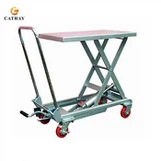
- Scissor Lifts: These lifts use a scissor-like mechanism to raise and lower the platform. They're available in both electric and hydraulic versions and can reach relatively high heights. Scissor lifts are commonly used in construction, maintenance, and industrial applications.
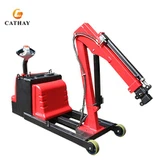
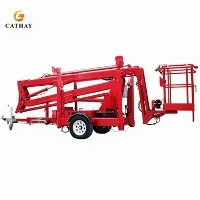
- Boom Lifts: Boom lifts have an extendable arm, or boom, that can be maneuvered in different directions. They offer greater reach and flexibility compared to other types of vertical lifts and are often used for tasks such as tree trimming, window cleaning, and outdoor construction.
- Vertical Reciprocating Conveyors (VRCs): VRCs are used to transport goods between different levels in a building. They're commonly found in warehouses, factories, and distribution centers and can handle heavy loads.
Choosing the Right Vertical Lift
When it comes to choosing the right vertical lift for your needs, there are a few factors you need to consider.
- Height Requirements: How high do you need to reach? Make sure the lift you choose has a maximum working height that meets your requirements.
- Load Capacity: How much weight do you need to carry? Consider the weight of the workers, tools, and materials that will be on the platform.
- Work Environment: Is the work going to be done indoors or outdoors? If it's indoors, you might need a lift that's quiet and emissions-free. If it's outdoors, you'll need a lift that can withstand the elements.
- Maneuverability: Do you need to move the lift around a tight space? Look for a lift that's compact and easy to maneuver.
- Budget: How much are you willing to spend? There are vertical lifts available at different price points, so make sure you choose one that fits your budget.
Conclusion
So, there you have it - a rundown of the different types of vertical lifts available. Whether you're looking for a compact and maneuverable mast aerial work platform, an oil-free vertical access platform for a clean environment, or an auto walk platform lift for large-scale projects, there's a vertical lift out there that's perfect for your needs.
If you're interested in purchasing a vertical lift or have any questions about our products, feel free to get in touch. We're here to help you find the right lift for your business and provide you with the support you need to keep it running smoothly.
References
- OSHA Guidelines for Aerial Work Platforms
- Industry Reports on Vertical Lift Technologies