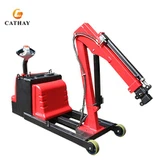

A floor crane is an indispensable tool in various industrial settings, from warehouses to manufacturing plants. Its ability to lift and move heavy loads efficiently and safely is crucial for smooth operations. One of the key factors that contribute to the safe and efficient functioning of a floor crane is the proper alignment of its lifting mechanism. In this blog post, as a floor crane supplier, I'll share insights on how to ensure the proper alignment of a floor crane's lifting mechanism.
Understanding the Importance of Alignment
Proper alignment of the lifting mechanism is essential for several reasons. Firstly, it ensures the stability of the crane during operation. Misaligned components can lead to uneven distribution of weight, increasing the risk of the crane tipping over, especially when lifting heavy loads. Secondly, aligned components reduce wear and tear on the crane parts. When the lifting mechanism is out of alignment, excessive stress is placed on certain parts, leading to premature failure and costly repairs. Finally, a well - aligned lifting mechanism enhances the accuracy of lifting and positioning, allowing for more precise placement of the load.
Pre - Operation Inspection
Before using the floor crane, a thorough pre - operation inspection is necessary. Start by visually inspecting the crane's frame. Look for any signs of damage, such as cracks or bends. A damaged frame can cause misalignment of the lifting mechanism. Check the wheels and casters to ensure they are in good condition and roll smoothly. Uneven or damaged wheels can affect the crane's stability and alignment during movement.
Inspect the mast and the lifting chain or cable. The mast should be straight and free from any signs of deformation. The lifting chain or cable should be properly tensioned and free from kinks or fraying. A loose or damaged chain can cause the load to sway and affect the alignment of the lifting mechanism.
Installation and Setup
When installing the floor crane, it is essential to follow the manufacturer's instructions carefully. Ensure that the crane is placed on a flat and stable surface. Uneven surfaces can cause the crane to tilt, leading to misalignment. Use a spirit level to check the horizontal and vertical alignment of the crane's frame.
During the installation of the lifting mechanism, make sure all the components are properly seated and tightened. Loose bolts or nuts can cause the components to shift during operation, resulting in misalignment. Pay special attention to the alignment of the pulleys and gears. The pulleys should be parallel to each other and properly aligned with the chain or cable. Misaligned pulleys can cause the chain to rub against the sides, leading to premature wear and potential misalignment.
Periodic Maintenance
Regular maintenance is key to ensuring the proper alignment of the floor crane's lifting mechanism. Schedule periodic inspections and lubrication of the crane's moving parts. Lubrication reduces friction and wear, which can help maintain the alignment of the components.
Check the alignment of the lifting mechanism at regular intervals. Use precision measuring tools, such as laser alignment tools or dial indicators, to measure the alignment of the mast, pulleys, and other components. If any misalignment is detected, make the necessary adjustments immediately.
Checking and Adjusting the Mast
The mast is a critical component of the floor crane's lifting mechanism. To check its alignment, use a plumb line or a laser level. Hang the plumb line from the top of the mast and check if it is perfectly vertical. If the mast is out of alignment, it may be due to a loose base or a bent mast.
If the base is loose, tighten the bolts or nuts that secure it to the frame. If the mast is bent, it may be necessary to replace it. In some cases, minor bends can be corrected by using appropriate tools, but this should only be done by a qualified technician.
Aligning the Pulleys
Pulleys play a crucial role in the smooth operation of the lifting mechanism. To align the pulleys, first, ensure that they are properly mounted on their shafts. Check for any signs of wear or damage on the pulley grooves. Worn - out grooves can cause the chain or cable to slip, affecting the alignment.
To align the pulleys horizontally, use a straightedge. Place the straightedge across the faces of the pulleys and check if they are in a straight line. If not, adjust the position of the pulleys by loosening the mounting bolts and repositioning them.
For vertical alignment, use a level. The pulleys should be level with each other to ensure that the chain or cable runs smoothly. Make small adjustments as needed to achieve proper alignment.
Gear Alignment
If your floor crane has gears in its lifting mechanism, proper gear alignment is essential. Misaligned gears can cause noise, vibration, and premature wear. Check the gearbox for any signs of oil leakage, which can be an indication of misalignment or other problems.
To align the gears, use a gear alignment tool. This tool measures the distance between the gears and ensures that they are properly meshed. Make adjustments to the gear position by adjusting the mounting brackets or shims.
Training and Operator Awareness
Proper training of the crane operators is also crucial for maintaining the alignment of the lifting mechanism. Operators should be trained on the correct operation of the crane, including how to load and unload the crane safely. Incorrect loading practices, such as placing the load off - center, can cause misalignment and instability.
Operators should be aware of the signs of misalignment, such as unusual noise, vibration, or uneven movement of the load. If they notice any of these signs, they should immediately stop the operation and report the issue for inspection and repair.
Different Types of Floor Cranes and Alignment Considerations
In our product line, we offer various types of floor cranes, such as the Movable Counter Balanced Floor Crane. This type of crane has a counter - balance system that helps to improve stability. When ensuring alignment for this crane, pay special attention to the proper installation and adjustment of the counter - balance weights. Misaligned weights can cause the crane to tip or become unstable during lifting.
The Mobile Engine Hoist Crane is designed for lifting engines and other heavy equipment. For this crane, the alignment of the lifting arm and the hooks is crucial. The lifting arm should be properly extended and retracted in a straight line, and the hooks should be aligned with the center of gravity of the load.


Our Small Lift Crane is compact and versatile. It is important to ensure the alignment of its small - scale components, such as the mini - pulleys and chains. Even small misalignments in these components can affect the lifting performance.
Conclusion
Ensuring the proper alignment of a floor crane's lifting mechanism is a multi - faceted process that involves pre - operation inspections, correct installation, regular maintenance, and proper operator training. By following the steps outlined in this blog post, you can significantly improve the safety, efficiency, and longevity of your floor crane.
If you are in the market for a reliable floor crane or need further advice on maintaining the alignment of your existing crane, we are here to help. Our team of experts can provide you with the best solutions and support to meet your needs. Contact us to discuss your requirements and start a procurement negotiation today.
References
- Engineering Handbook for Lifting Equipment, 3rd Edition
- Safety Guidelines for Floor Crane Operations by Industrial Safety Council