

Space Constraints and Engineering Decisions: Why Hydraulic Lifts Dominate Accessibility Retrofits
In the selection of accessibility elevators and lifting platforms, hydraulic drive solutions often become the preferred-and sometimes the only viable-choice for retrofitting old buildings and installing lifts in historic structures. This is not coincidental but is determined by the specific use scenarios of accessibility facilities and the inherent advantages of hydraulic systems.
Space Constraints Make the Difference
Traction elevators need overhead machine rooms and load-bearing hoistway walls. Old buildings rarely have these. Hydraulic systems transfer all weight directly to the ground through cylinders, requiring no structural changes to walls or ceilings. The power unit can sit up to 20 meters away, needing just 4-5 square meters of machine room space.
Brown University's historic campus case proves the point. When their outdoor wheelchair lift corroded, they replaced it with a hydraulic telescopic system that kept the exact same footprint-no new foundation work, no damage to the heritage structure.
For China's old stairwell buildings under 1.2 meters wide, hydraulic platform lifts work without pits or floor destruction. They tuck under stairs and run by remote control. A Dalian pilot project in 2021 ran steadily for over a year.
A Practical Choice for Older Residential Communities
The large number of old residential buildings without elevators in Chinese cities represents the most pressing need for accessible lifting equipment. These buildings generally face the practical difficulties of narrow corridors, lack of pre-reserved shafts, and the inability to excavate pits. Hydraulically driven accessible lifting platforms demonstrate unique adaptability in this scenario.
These devices do not require damaging the original corridor floor or excavating pits, occupying minimal corridor space. They can be installed in unused space under stair steps, and the hydraulic power unit is controlled by a wireless remote to lift and lower the vehicle, capable of transporting one wheelchair or multiple people with mobility impairments up and down stairs. When the corridor width of a residential building built in the 1980s is less than 1.2 meters, any solution requiring the excavation of pits or the construction of machine rooms is not feasible, making hydraulic lifting platforms almost the only viable technological approach under such space constraints.
Multiple Redundancies in Safety
For accessible facilities, safety is not an optional bonus, but a minimum requirement. Wheelchair users, the elderly, and people with mobility impairments have far lower self-rescue capabilities in emergencies than the general population, meaning that the safety design of equipment must have a higher degree of redundancy.
Hydraulic systems have a natural structural advantage in this regard. In addition to the electrical and mechanical safety devices common in ordinary elevators, hydraulic solutions also have multiple protection mechanisms specifically designed for emergency scenarios: an overflow valve prevents excessive system pressure during upward movement, which could lead to uncontrolled acceleration; an emergency manual valve allows the car to slowly descend to the nearest floor and automatically open the doors in the event of a power failure, ensuring passengers can evacuate safely without external rescue; a manual pump allows staff to manually pump high-pressure oil to raise the car in the event of a complete power failure; a pipeline rupture valve automatically cuts off the oil circuit in the event of an accidental hydraulic pipeline rupture, preventing the car from falling uncontrollably; and an oil tank temperature protection device prevents excessive oil temperature from causing system seal failure.
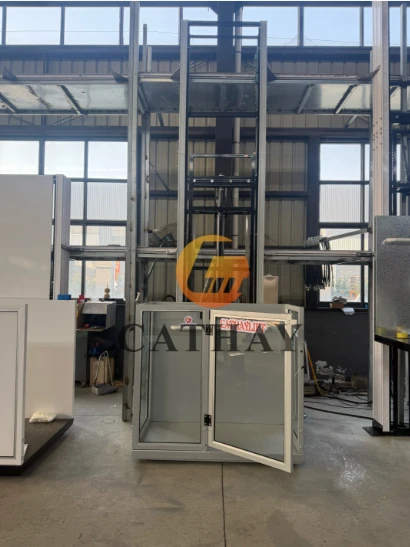
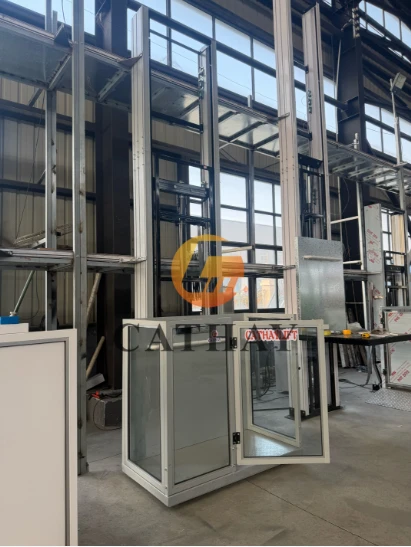
For more information about the home elevators, welcome to contact us.
Shandong Cathay Machinery Co., Ld
www.cathaylift.com
Email: sales@cathaylift.com