

Industry Knowledge of Trailer Folding Arms and Tow Behind Man Lift
I. Core Definition and Industry Positioning
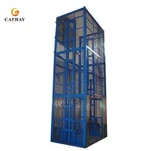
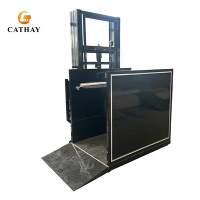
tow behind man lift is a core functional component of a trailer, which is a foldable and telescopic mechanical arm. It relies on hydraulic and electronic control systems to perform various operations, mainly used for heavy object traction, aerial work, equipment hoisting, etc. It belongs to the field of special automobile parts, with downstream coverage in multiple scenarios such as rescue, infrastructure construction, and municipal engineering.
II. Core Classification
(I) By Application
1. Rescue Type: Equipped with rescue trailers, used for traction and lifting of faulty/accident vehicles, suitable for various road conditions.
2. Aerial Work Type: Equipped with aerial work vehicles, used for manned or cargo-carrying aerial work, suitable for scenarios such as construction and electric power.
3. Lifting Type: Equipped with truck-mounted cranes, integrating transportation and hoisting, used for cargo loading, unloading and transfer.
(II) By Structure
1. Single-section Folding Arm: Simple structure, weak load-bearing capacity, suitable for light-load operations.
2. Multi-section Folding Arm: Composed of 2-4 sections, strong load-bearing capacity and large operating radius, which is the mainstream in the industry.
3. Telescopic Folding Arm: With both folding and telescopic functions, suitable for complex operating scenarios.
III. Core Structure and Working Principle
It is mainly composed of the arm body (high-strength steel), drive system (mainstream hydraulic drive), control system (manual + electronic control), and auxiliary components (outriggers, hooks, etc.). The core of the work is to obtain power through the power take-off, convert it into hydraulic power, control the arm body to complete folding, telescoping and other actions, and ensure safety through the control system.
IV. Core Application Scenarios
1. Road Rescue: Clear faulty vehicles to ensure smooth road traffic.
2. Construction: Aerial work and building material hoisting to improve construction efficiency.
3. Electric Power and Municipal Engineering: Urban operation and maintenance work such as power maintenance and street lamp maintenance.
4. Logistics and Industry: Cargo loading, unloading and transfer, suitable for scenarios such as factories and ports.
5. Emergency Rescue: Rescue and obstacle clearance at natural disaster sites.
V. Industry Technology and Development
Core technologies focus on material lightweight, hydraulic stability, and intelligent upgrading; current industry pain points are the dependence on imports for high-end components and low standardization. The development trends are intelligence, electrification, localization of core components, as well as scenario-based customization and international layout.
VI. Selection and Safety Points
(I) Selection
Match operational needs, pay attention to the quality of core components, and balance operational convenience with cost and after-sales service.
(II) Safety
Comply with operating procedures, make preparations before operation, strengthen daily maintenance, and avoid operation in harsh environments.
VII. Industrial Chain and Core Enterprises
The upstream includes raw material and core component suppliers, the midstream includes folding arm manufacturers, and the downstream covers various application scenarios; core international enterprises include Bosch Rexroth and Palfinger, etc., and domestic ones