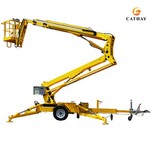


CATHAY Wheelchair Lift Industry Knowledge
1. Core Definition
Wheelchair lifts are key accessibility equipment, helping people with mobility impairments (wheelchair users, the elderly, temporary injury victims) overcome vertical barriers (steps, elevated entrances, etc.). They are a core segment of the global accessibility equipment industry, closely linked to demographics, policies, and technological progress.
2. Market Overview
- Market Size: Valued at USD 3.67 billion in 2024, expected to reach USD 6.40 billion by 2030 (CAGR 9.55%); another forecast: USD 3.0 billion in 2025 to USD 6.1 billion by 2034 (CAGR 7.94%).
- Growth Drivers: Aging population, strict international accessibility regulations (e.g., ADA in the US, European Accessibility Act), rising incidence of disabilities.
- Regional Distribution: Mature European & American markets (high penetration); fastest-growing Asia-Pacific market; China contributes 42% of global output.
3. Core Product Classification
- By Installation: Fixed (vertical platform/inclined stairway, permanent installation) and Mobile (portable, temporary use).
- By Power: Hydraulic (smooth, heavy-load, suitable for public/hospital use) and Electric (energy-saving, easy to maintain, for residential/small commercial use).
- By Application: Residential (compact, 200-300kg load), Commercial/Public (300-500kg load, high safety), Vehicle-mounted (for vehicles), Aquatic (for pools/spas).
4. Core Structure & Key Technologies
- Core Structure: Lifting platform (non-slip, high-strength material), Drive system (hydraulic/electric), Control system (manual/electric, intelligent functions for high-end models), Safety protection system (anti-slip, emergency stop, obstacle sensors, backup power).
- Key Technologies: Intelligent upgrade (IoT, AI), Lightweight design (high-strength aluminum alloy), Safety optimization (anti-pinch/anti-fall), Energy-saving (electric/solar auxiliary power).
5. Industry Challenges & Trends
- Challenges: High initial costs, unbalanced regional development, dependence on imported core components, insufficient after-sales service.
- Trends: Market expansion (Asia-Pacific/African markets), intelligent/customized development, core component localization, integration with inclusive infrastructure, popularization of "rental + maintenance" services.
6. Standards & Purchase Guidelines
- Core Standards: ADA (US), EN 81-40 (Europe), ISO 9386 (international), specifying load, speed, safety, and installation requirements.
- Purchase Guidelines: Clarify application scenarios, focus on core performance, select qualified manufacturers (with international certifications), pay attention to daily maintenance.