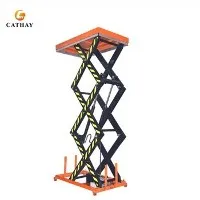


As the core equipment in the field of modern aerial work, with its technological innovation and structural optimization, it has become the preferred equipment in construction, power, logistics and other industries. Its core design requirements cover security, stability and convenience, and the following analysis of industry technical standards from the perspective of key configuration.
Structural design and material technology
The equipment adopts aluminum alloy material to build the main frame, and realizes the double improvement of load capacity and wind resistance through scientific mechanical distribution. The core support structure incorporates lightweight aluminum alloy and non-slip alloy steel plate combination technology, while ensuring overall portability, significantly enhance wear resistance and corrosion resistance, making the equipment both flexible mobility and long-term durability, especially suitable for complex working conditions.
Intelligent control systems and spatial optimization
Integrated main control electrical box adopts sealed integrated circuit design, built-in overload protection, leakage monitoring and other multiple safety modules, with intelligent controllable telescopic system, equipment expansion space is reduced by more than 30% compared with traditional models, and the telescopic joint adopts double redundant hydraulic locking device to ensure structural stability during operation. The design not only meets the needs of small site operation, but also reduces the maintenance complexity through modular layout.
Human-computer interaction and dynamic systems
The operating platform has an anti-miscontact protection mode, and is equipped with an ergonomic touch panel and mechanical emergency handle to achieve stepless adjustment of lifting speed and rapid response to emergency braking. The power system is equipped with a high-frequency hydraulic pump station, which keeps the lifting process smooth and linear through pressure adaptive compensation technology, and works with maintenance-free sealing components to reduce the failure rate of the hydraulic system by more than 40% to ensure operational reliability under extreme conditions.
The current industry standard emphasizes the whole life cycle management of equipment, requiring production enterprises to establish a complete service system from material traceability to intelligent operation and maintenance. Future technology iterations will focus on the integration of Internet of Things remote monitoring and new energy power, and further promote the upgrading of high-altitude working equipment to the direction of intelligence and low carbonization.

For more information about the Single Mast Aluminum Alloy Lift, welcome to contact us.
Shandong Cathay Machinery Co., Ltd
www.cathaylift.com
Email: sales@cathaylift.com