

How To Maintain Low-Level Access Platform?
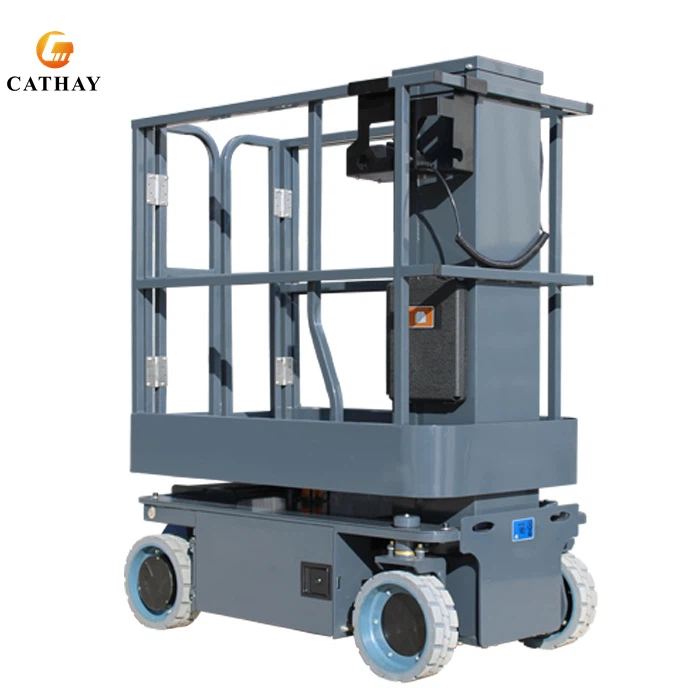
Low-level access platforms are highly versatile and efficient tools that provide a safe and secure way to work at lower heights. With their compact size, AC motor, and straight elevation, these platforms are ideal for use in tight indoor and outdoor spaces where traditional ladders or scaffolds would be impractical or unsafe.


When the aerial work platform is in use, daily maintenance plays an important role in the service life and performance of the product. Many operating users are very vague about the maintenance steps, and we have made a professional explanation for this.
Oil Check Program:
• Lubrication point - hydraulic tank
• Reservoir capacity: 0.80 gallons. (3 liters)
• Lubricating oil - hydraulic oil
• Interval - check every day
Note: Before checking the oil level in the reservoir, make sure the hydraulic oil has warmed to operating temperature.
1. From either side of the machine, open the side access door on the base frame. Locate the hydraulic oil tank on pump unit (3). Check the oil level in the hydraulic tank by looking at the markings on the side of the tank. Tanks are marked with MIN (minimum) and MAX (maximum) markings. The oil level must be within these markings for proper operation.
2. If additional oil is needed, wipe off all dirt and debris from the filler/breather cap area, then add the appropriate grade of oil using a funnel with a flexible nozzle or a plastic squeeze bottle. Add oil until the oil level is between the MIN and MAX marks.
NOTE: Care should be taken not to introduce any impurities (dirt, water, etc.) when removing the cap.
Hydraulic Oil Inspection Procedure:
NOTE: Recommended lubrication intervals are based on machine operation under normal conditions. For machines used in the multi-shift operation and/or exposed to harsh environments or conditions, the frequency of lubrication must be increased accordingly.
Tires and wheels Tire wear and damage
Check tires regularly for wear or damage. Tires with frayed edges or deformed profiles need to be replaced. Tires with severe damage to the tread area or sidewall require immediate evaluation before the replacement machine is put into service.
Wheel and tire replacement:
Replacement wheels must have the same diameter and profile as the original wheels. Replacement tires must be the same size and rating as the tire is replaced.
wheel mount:
Applying and maintaining proper wheel mounting torque is very important.
Wheel nuts must be installed and maintained with proper torque to prevent loosening of the wheel, damage to the nut, and possible separation of the wheel from the axle. Be sure to only use lug nuts that match the wheel taper angle.
Tighten the lug nuts to the proper torque to keep the wheels from loosening. Use a torque wrench to tighten the fasteners. If you don't have a torque wrench, use a lug wrench to tighten the fasteners, then immediately have a service station or dealer torque the lug nuts to the proper torque.

Overtightening can cause the lug nuts to break or permanently deform the mounting holes in the wheel. The correct steps to install the wheels are as follows:
1. Activate all lug nuts by hand to prevent cross-threading. Do not use lubricants on threads or nuts.
2. Tighten the lug nuts.
3. The tightening of nuts should be carried out in stages. Tighten the lug nuts to wheel torque in the recommended sequence.
The wheel nuts should be tightened after the first 50 hours of operation and after each wheel removal. Check torque every 3 months or 150 hours of operation.
The above is the specific explanation made by Shandong Cathay Machinery Co., Ltd for the specific steps of low-level access platform maintenance. For more information about the low-level access platform, welcome to contact us for more details about the product.
Shandong Cathay Machinery Co., Ltd
www.cathaylift.com
Email:sales@cathaylift.com